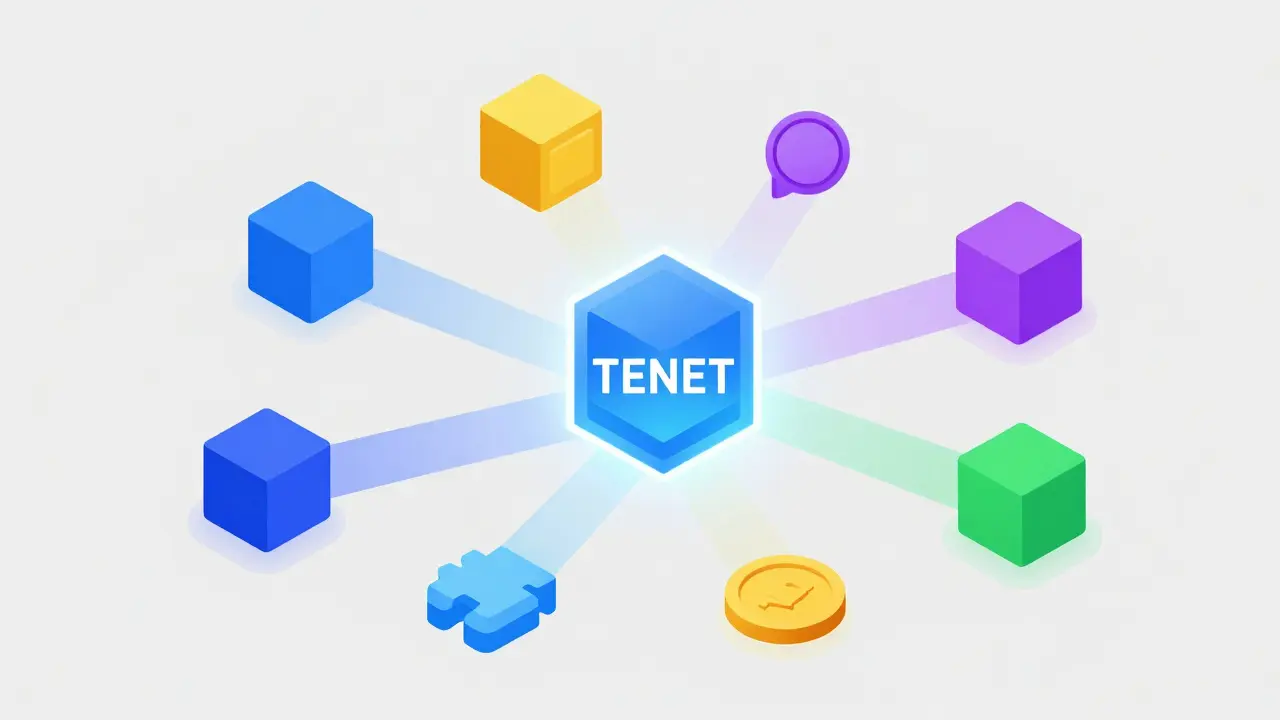
Most Layer 1 blockchains ask you to stake their native token to secure the network. TENET is a Layer 1 blockchain ecosystem specifically designed for Liquid Staking Derivatives (LSDs), allowing users to stake cross-chain assets like ETH and BNB to secure the chain. This approach flips the traditional model on its head. Instead of locking up a single coin, you can use diversified assets from other major networks to help run the network while earning yields.
If you have been following decentralized finance (DeFi), you know that liquidity and yield are constant battles. TENET aims to solve this by building a system where security, liquidity, and simplicity work together. The project launched in 2023 without venture capital funding, meaning the community controls governance rather than early investors. But what exactly does that mean for you as a user or investor?
The Core Innovation: Diversified Proof of Stake
The heart of the TENET protocol is its unique consensus mechanism called Diversified Proof of Stake (DiPoS). In most chains, if the native token price crashes, the network’s security often weakens because validators have less skin in the game. TENET avoids this by accepting liquid staking derivatives (LSDs) from multiple blockchains.
You can stake tokens like wstETH and cbETH from Ethereum, plus staking derivatives from BNB Chain, Cosmos (ATOM), and Cardano (ADA). These assets help secure the Tenet blockchain through a Byzantine fault-tolerant (BFT) consensus algorithm. This means the network remains secure even if some validators act maliciously, provided the majority are honest. By diversifying the collateral, the network becomes more resilient to market volatility in any single asset.
- Cross-Chain Security: Uses assets from Ethereum, BNB, Cosmos, and Cardano.
- Validator Flexibility: Users can run their own validators or delegate stakes to others.
- High Scalability: Offers transaction speeds comparable to top Layer 1 chains without sacrificing security.
Utility of the TENET Token
The TENET token has multiple functions including serving as gas fees, enabling governance via vote-locking, and distributing rewards serves several critical roles within the ecosystem. First, it acts as the native gas token. Every time you send a transaction or interact with a smart contract on the Tenet chain, you pay fees in TENET. This creates consistent demand for the token based on network usage.
Second, TENET powers governance. Holders can convert their tokens into vote-escrowed TENET (veTENET). This "vote-locking" system gives long-term holders more influence over decisions, such as how block rewards are distributed and which DeFi protocols receive incentives. It aligns the interests of those who want the network to succeed long-term.
Rewards on the network come from inflation and transaction fees, similar to Ethereum. However, there is an optional third reward type known as the "take rate." This is an annualized tax applied to LSDs staked on the platform, shared among stakers to diversify yields. This structure aims to provide a steady income stream for participants beyond just price appreciation.
Key Features: LSDC and CLIP
Tenet introduces two innovative financial primitives that set it apart from other chains: the Liquid Staking Dollar Coin (LSDC) and the Collateralized Liquid Interest Position (CLIP).
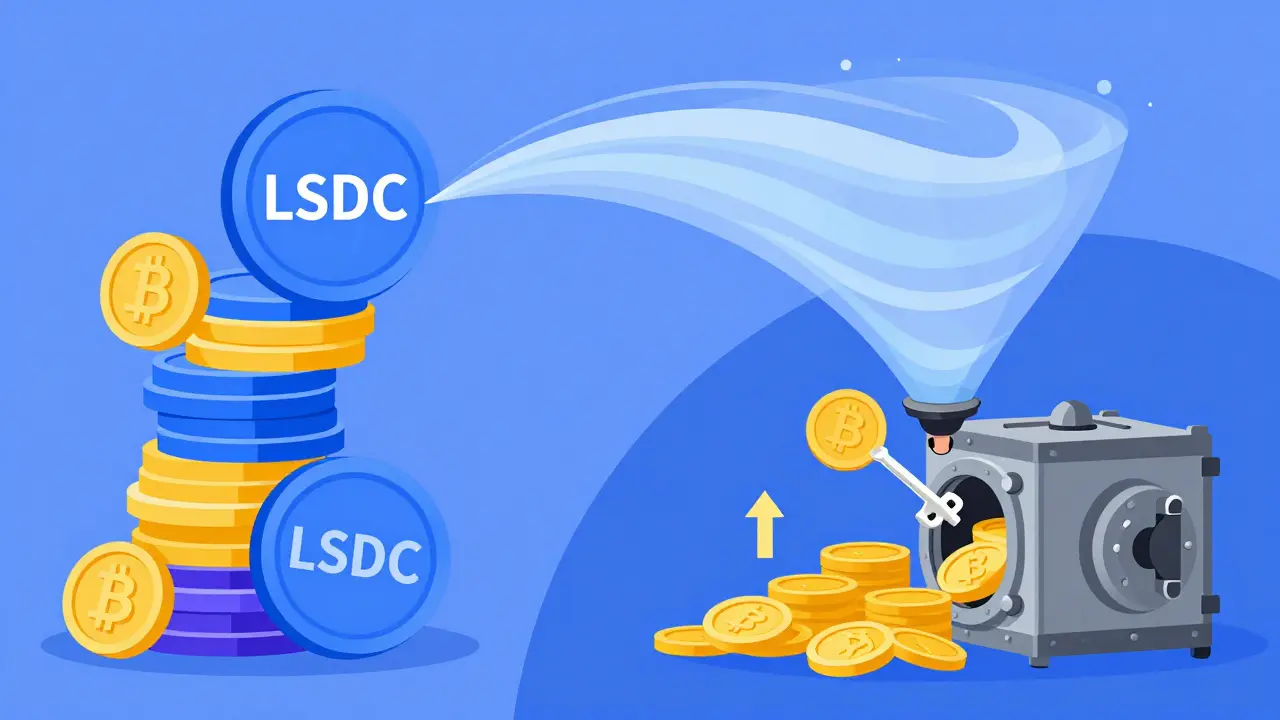
LSDC is a decentralized stablecoin backed by a diverse basket of liquid staking derivatives including ETH, BNB, ATOM, and ADA. Unlike traditional stablecoins pegged to the US dollar via fiat reserves, LSDC is overcollateralized by crypto assets. This makes it resilient against market volatility while maintaining a stable value. The backing assets are actively staked to secure the Tenet network, creating a symbiotic relationship between stability and security.
CLIP allows users to borrow LSDC against their staked assets, unlocking capital efficiency while continuing to earn interest. Here is how it works: you deposit your staked assets as collateral. You can then borrow LSDC against them. Crucially, your original assets continue to earn staking yields. This dual-income model lets you benefit from both the block rewards on Tenet and the underlying yields from Ethereum or other chains. It maximizes capital efficiency, a key metric in DeFi.
| Component | Function | Key Benefit |
|---|---|---|
| TENET Token | Gas fees & Governance | Aligns user incentives with network health |
| LSDC | Decentralized Stablecoin | Stability backed by diverse crypto assets |
| CLIP | Lending Protocol | Unlock liquidity without unstaking |
| Eva Wallet | User Interface | Simplifies complex DeFi actions for retail users |
The Eva Wallet: Bridging Web3 and Retail
Technology is only useful if people can use it. That is why the Eva Wallet is a non-custodial, AI-enhanced Web3 wallet designed specifically for retail investors to stake assets and optimize LSDs seamlessly was created. It is not just another crypto wallet; it is an application built directly on Tenet to make decentralized finance accessible.
Eva leverages DeFiGPT technology to provide AI features, including a crypto market chatbot. This helps users understand market trends and manage their portfolios without needing deep technical knowledge. You can stake assets, optimize liquid staking derivatives, and engage with on-chain actions all within the wallet. The goal is to make blockchain transactions as intuitive as traditional banking, while you still maintain self-custody of your assets. Small fees for these operations are paid in TENET tokens, further driving utility for the native coin.
Technical Architecture and Development
Tenet is built using the Cosmos SDK with Ethereum Virtual Machine (EVM) compatibility, allowing developers to deploy apps easily. This combination is powerful. The Cosmos SDK provides robust modular architecture and high performance. EVM compatibility means developers familiar with Ethereum tools can build on Tenet without learning a new programming language. This lowers the barrier to entry for dApps, DeFi protocols, and DAOs.
The mainnet launched in Q3 2023, followed by a suite of applications including a decentralized exchange (DEX), a lending market, and an LSD hub. The official Tenet DEX is designed to unlock deep liquidity between Meta LSDs and their underlying counterparts. This ensures that users can easily swap between different staking derivatives without facing high slippage or fragmented liquidity pools.
A notable aspect of TENET's development is its lack of venture capital funding. Most crypto projects sell large portions of their supply to VCs at low prices, leading to massive unlocks and sell pressure later. TENET avoided this. All investors were subject to a 3-month cliff before tokens unlocked linearly over 20 months. This structure prioritizes decentralization and community control from day one.

Market Context and Supply Details
Understanding the tokenomics is crucial for any potential investor. The maximum supply of TENET is capped at 1.2 billion units. At launch in January 2023, 216 million tokens (18% of total supply) were in circulation. The initial market capitalization was $625,000 excluding liquidity.
As of recent data, TENET has experienced significant price volatility, trading at levels far below its launch price. This reflects the broader challenges in the crypto market during 2024-2025, where many altcoins faced devaluation despite strong technological fundamentals. Always remember that past performance does not guarantee future results. The low daily trading volume on some exchanges suggests that liquidity might be thin, which can lead to higher slippage when buying or selling larger amounts.
Why TENET Matters in DeFi
The rise of liquid staking derivatives has become a vertical in itself. Projects like Lido and Rocket Pool showed that staking could be flexible. TENET takes this further by making LSDs the core security mechanism of a new blockchain. This creates a flywheel effect: more LSDs staked mean better security, which attracts more users, which increases demand for the TENET token and LSDC.
By combining security, liquidity, and simplicity, TENET offers a comprehensive solution for the next generation of DeFi. Whether you are a developer looking for an EVM-compatible chain with high throughput, or a retail investor seeking yield optimization through the Eva Wallet, the ecosystem provides specific tools tailored to those needs. The absence of VC dominance also signals a commitment to true decentralization, a value increasingly important to the crypto community.
Is TENET safe to use?
TENET uses a Byzantine fault-tolerant consensus algorithm and relies on diversified proof of stake from established chains like Ethereum and BNB. This enhances security compared to single-asset staking models. However, as with all DeFi protocols, users should always verify smart contracts and manage their private keys securely, especially when using wallets like Eva.
How do I earn rewards on TENET?
You can earn rewards by staking cross-chain LSDs to secure the network, either as a validator or by delegating to one. Rewards come from block emissions, transaction fees, and an optional take rate on staked LSDs. Additionally, using CLIP allows you to borrow LSDC while keeping your staked assets earning yield.
What is the difference between TENET and Ethereum?
Ethereum is a general-purpose Layer 1 blockchain. TENET is a specialized Layer 1 focused on liquid staking derivatives. While Ethereum uses ETH for security, TENET accepts LSDs from multiple chains (ETH, BNB, ATOM, ADA) to secure its network. TENET also offers built-in tools like LSDC and CLIP for yield optimization, which are not native to Ethereum.
Can I buy TENET on major exchanges?
TENET trades on various decentralized and centralized platforms. As of 2026, it is listed on approximately 30 active markets. Check current listings on reputable exchange aggregators to find the best liquidity and lowest fees for purchasing TENET tokens.
What is the role of the Eva Wallet?
Eva Wallet is the primary user interface for the TENET ecosystem. It is an AI-enhanced, non-custodial wallet that simplifies staking, LSD optimization, and DeFi interactions for retail investors. It allows users to perform complex financial operations intuitively while maintaining full control of their assets.
Felix Eduardo Velasquez
1 05 26 / 21:15 PMThe Diversified Proof of Stake mechanism is genuinely interesting from a technical standpoint. Most L1s are stuck in the single-asset security trap where price crashes directly correlate with validator exit risks. By allowing wstETH, cbETH, and other LSDs to secure the network, TENET creates a more resilient security model that isn't solely dependent on one volatile asset's market cap. It reminds me of how traditional banking diversifies collateral requirements to mitigate systemic risk. The BFT consensus algorithm handling these cross-chain assets without requiring wrapped versions for every transaction is a significant engineering feat. I've been tracking the Cosmos SDK developments closely, and this EVM compatibility layer seems robust enough for serious dApp deployment. The lack of VC funding is also a notable differentiator in today's market landscape.
Ralph Espinosa
3 05 26 / 07:09 AMI agree completely!! The tokenomics structure here is much healthier than most launches we see nowadays!!! No massive VC dumps waiting to happen!!! The linear unlock over 20 months after a cliff shows they actually care about long-term stability!!! Plus the veTENET governance model aligns incentives perfectly!!! You lock up your tokens to get voting power which means you have skin in the game!!! It’s rare to see such thoughtful economic design in new L1s!!!
Arti Jain
4 05 26 / 02:52 AMAnother American-centric narrative pushing complex DeFi primitives. The West loves to complicate simple concepts like staking with unnecessary layers. India has better infrastructure for direct utility. This looks like another speculative vehicle for retail investors who don't understand risk. Stick to proven models.
VIVEK SINGH
4 05 26 / 11:07 AMOh please, Arti. As if your 'proven models' aren't just centralized exchanges burning through user funds because they lack real innovation. You call it complexity; I call it financial engineering that actually works. The fact that you can stake ETH derivatives and earn yield while securing a new chain is elegant. Your nationalist bias is showing again. Maybe try reading the whitepaper instead of posting hot takes based on geography. Passive-aggressive much?
Arti Jain
4 05 26 / 23:30 PMYour arrogance is transparent. Complexity does not equal value. Simple systems survive. Complex ones fail when liquidity dries up. We saw this in 2022. You are repeating history. Wake up.
VIVEK SINGH
6 05 26 / 11:17 AMHistory repeats itself only for those who refuse to learn. The difference now is diversified collateral backing. You're ignoring the fundamental shift in how security is priced. Keep crying about simplicity while others capture the yield. Sarcasm aside, the tech speaks for itself.
April D Thompson
6 05 26 / 17:33 PMIt’s fascinating how this ecosystem tries to bridge the gap between institutional-grade security and retail accessibility! The Eva Wallet with its AI features feels like a genuine attempt to democratize DeFi rather than just building another tool for degens! I love the idea of using CLIP to borrow against staked assets while still earning yields-it’s like having your cake and eating it too! But honestly, the real magic is in the community governance aspect! When users hold the keys to the kingdom, the project tends to evolve in ways that benefit everyone involved! It’s a beautiful symphony of finance and technology!
Lex Harley
8 05 26 / 05:28 AMi mean the clip mechanic is kinda cool but i worry about the smart contract risk with all these cross chain bridges. if the bft consensus fails or there is a bug in the evm compat layer we could lose everything. the jargon around lsdcs and clips is heavy but the concept of unlocking liquidity without unstaking is solid. just need to verify the audits first before putting real money in.
Harvey Alford
9 05 26 / 11:48 AMMy neighbor lost his savings on a similar sounding project last year. He cried for weeks. I told him crypto is gambling. You should listen to people who know pain. Don't invest unless you want to suffer like he did. It's personal.
Robert Smith
11 05 26 / 11:20 AMNice breakdown 👍 The table comparing components was helpful 📊 Just waiting for more volume before dipping my toes in 🌊