Iraq Remittance Cost Calculator
Send Money to Iraq
Compare costs of sending money to Iraq through traditional services versus potential crypto channels.
Cost Comparison
Traditional Remittance
Cost: $0.00
(10% fee - typical for services like Western Union)
Potential Crypto Transfer
Cost: $0.00
(Under 2% fee - as reported in Iraq)
Savings
$0.00
0%
Important Notice: While crypto could potentially save you money, sending cryptocurrency to Iraq is illegal under Iraq's current regulations (Circular No. 125/5/9). This calculator shows the theoretical cost difference only.
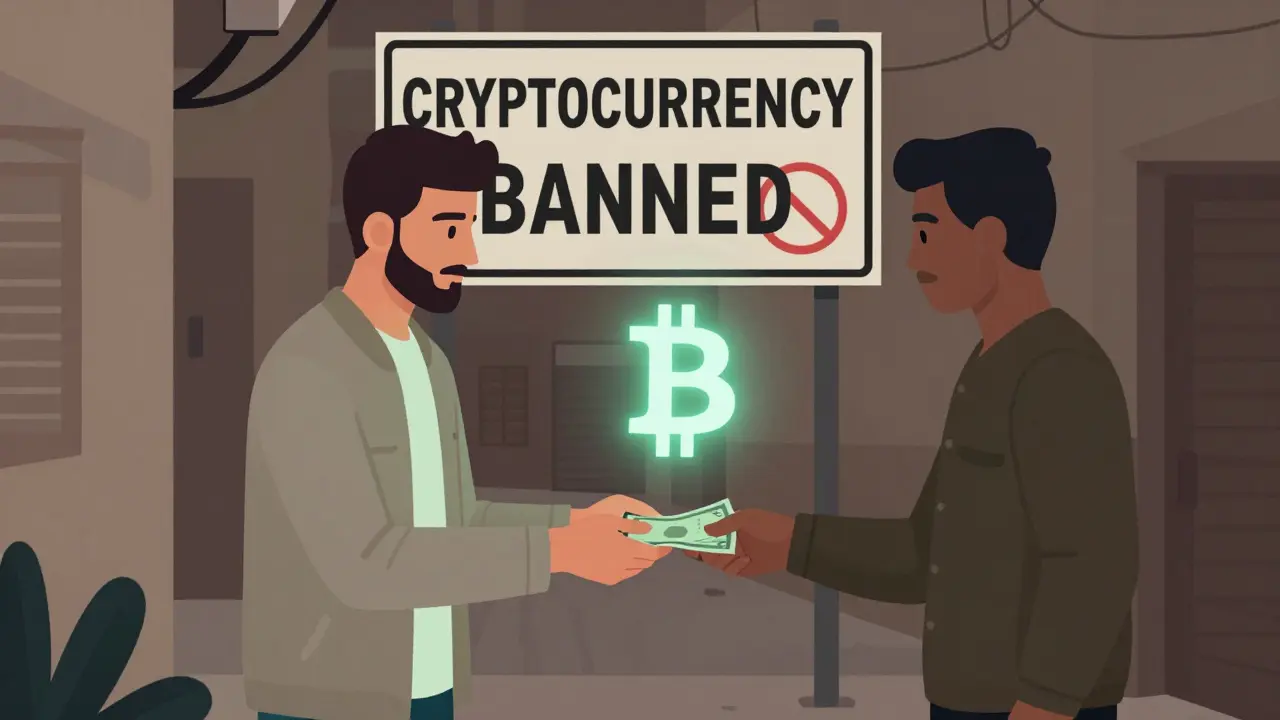
As of 2025, the Central Bank of Iraq enforces one of the strictest cryptocurrency bans in the world. It’s not just a warning-it’s a full legal prohibition. Banks, payment processors, and even e-wallet providers are banned from touching any form of digital currency. If you’re in Iraq and you’re using Bitcoin, Ethereum, or any other crypto, you’re doing it outside the law. And yet, people still do.
How the Ban Works
The ban didn’t happen overnight. It started in 2017, when the Central Bank of Iraq first flagged cryptocurrencies as risky. But the real teeth came in 2021 with Circular No. (125/5/9). This document made it crystal clear: no bank, no financial institution, no payment company can handle crypto transactions. Not even as an intermediary. Not even for exchange. Not even for holding. It didn’t stop there. In March 2022, the bank doubled down with a new directive tied to the Financial Action Task Force (FATF) guidelines. That meant institutions had to overhaul their internal controls. They had to check customers more carefully. They had to report anything suspicious. And they had to make sure no one used credit cards or digital wallets to buy crypto. The goal? To cut off all legal pathways to digital assets. The result? Iraq is one of only ten countries globally with a complete ban. Not a gray zone. Not a licensing system. Not a slow rollout. Just a hard stop.Why the Ban? The Official Story
The Central Bank of Iraq says the reasons are clear: money laundering, terrorism financing, and consumer protection. They point to scams like OneCoin, a fake cryptocurrency that defrauded millions worldwide. In 2018, the Supreme Fatwa Authority in Kurdistan even issued a religious ruling against OneCoin, calling it haram. That added cultural weight to the ban-making it not just a financial rule, but a moral one too. There’s also the issue of economic instability. Iraq’s currency, the dinar, lost value in 2020 when the government devalued it from 1,182 to 1,450 per U.S. dollar. Prices jumped. People lost trust in the system. The Central Bank of Iraq believes crypto could make this worse. If people start using Bitcoin to save money or pay bills, it could drain demand for the dinar. And with the government already struggling to cover its monthly budget-between 18 and 20 trillion dinars-it can’t afford another shock.The Hidden Reality: Crypto Still Moves
Here’s the contradiction: despite the ban, crypto doesn’t disappear. It just goes underground. In cities like Baghdad, Basra, and Erbil, peer-to-peer crypto trading thrives. People use WhatsApp, Telegram, and cash meetups to trade Bitcoin for Iraqi dinars. There are no official exchanges. No KYC checks. No bank records. Just trust, cash, and risk. The government doesn’t arrest individuals for owning crypto. There’s no law that says “possession of Bitcoin is a crime.” But if you’re caught trading large amounts, you could be flagged under anti-money laundering laws. That’s the gray area: you’re not breaking a crypto law-you’re breaking a finance law. And enforcement? Patchy at best. The Central Bank of Iraq has no real tools to track private transactions. No blockchain surveillance. No crypto monitoring software. So while the rules are strict, the reality is messy.
The CBDC: Iraq’s Alternative
While banning private crypto, the Central Bank of Iraq is quietly building its own digital currency. In March 2025, financial advisor Mazhar Mohammed Saleh confirmed the bank is in the research phase for a Central Bank Digital Currency (CBDC). This isn’t Bitcoin. It’s not decentralized. It’s not anonymous. It’s a digital version of the Iraqi dinar-controlled entirely by the government. The goals? Reduce printing costs, cut cash leakage, track spending, and fight money laundering. Sounds reasonable, right? But here’s the catch: a CBDC gives the government total visibility into every transaction. Every purchase. Every transfer. Every payment. And in a country where criticizing the government online can lead to arrest, detention, or salary cuts, that’s terrifying. Human rights groups warn this CBDC could become a surveillance tool. Imagine: the state knows exactly when you bought bread, paid rent, or sent money to family. No privacy. No anonymity. No escape. That’s the trade-off Iraq is making: control over freedom.How This Compares to the Rest of the World
Most countries don’t ban crypto-they regulate it. The U.S. taxes it. The EU licenses exchanges. Even China, which cracked down hard, still allows blockchain tech and has its own digital yuan. Iraq is different. It doesn’t want to manage crypto. It wants to erase it. And replace it with something it fully controls. That’s why Iraq ranks near the bottom in global crypto adoption indexes. Unlike Nigeria or Vietnam, where crypto is used to bypass inflation or send remittances, Iraq’s population is cut off from the global digital economy. No DeFi. No NFTs. No crypto savings. Just cash and fear.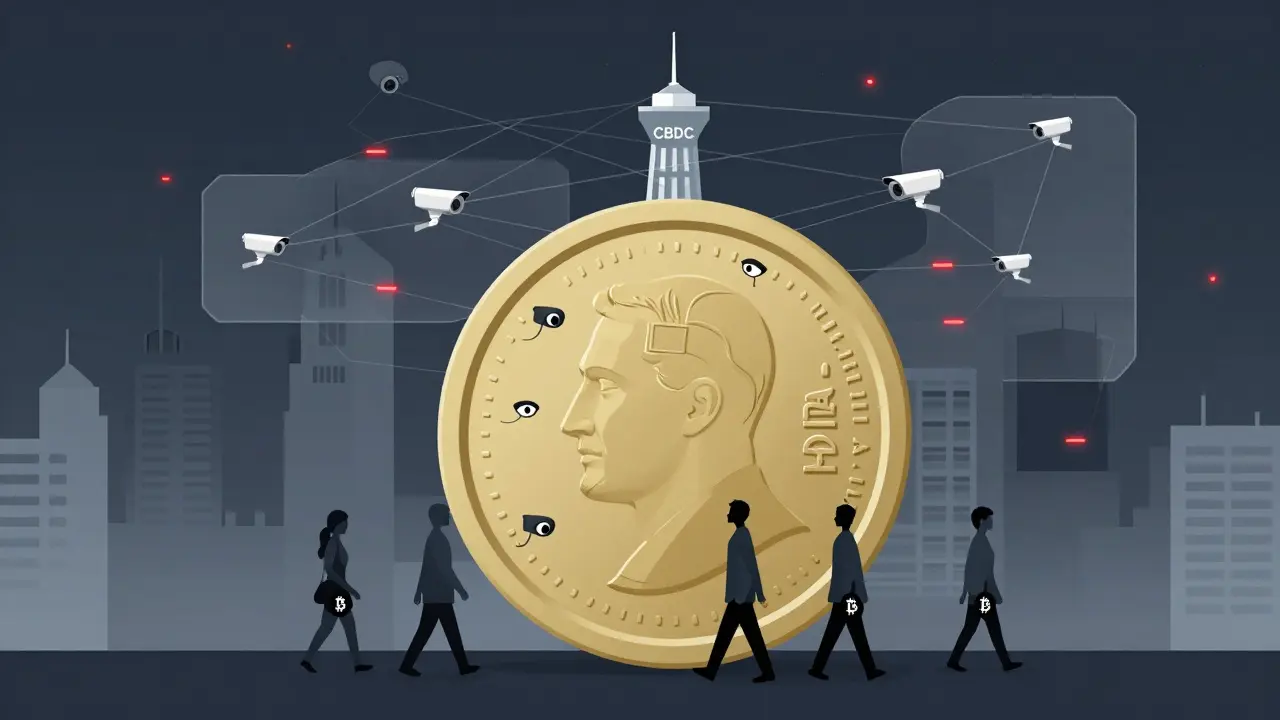
Who’s Affected the Most?
It’s not the banks. They follow the rules. It’s the people. Young Iraqis who want to earn online-freelancers, content creators, game developers-are locked out of global payment platforms like PayPal or Stripe. Many turn to crypto to get paid. Now, they can’t. They’re stuck with slow, expensive bank transfers or risky cash deals. Small businesses that rely on cross-border trade face the same problem. Importers can’t pay suppliers overseas without crypto. Exporters can’t get paid quickly. The ban hurts the economy more than it helps. And then there’s the diaspora. Millions of Iraqis abroad send money home. Most use traditional remittance services that charge 10% or more. Crypto could slash that to under 2%. But it’s illegal. So families pay more to stay connected.What’s Next?
The Central Bank of Iraq isn’t backing down. The CBDC is moving forward. The ban stays. There’s no sign of legislation to legalize crypto. No public debate. No parliamentary vote. Just top-down control. Legal experts say this creates a dangerous vacuum. Without clear laws, people don’t know what’s allowed. Banks are scared to innovate. Investors stay away. The economy stays stuck. Some analysts argue Iraq needs a balanced approach: allow regulated crypto use while cracking down on fraud. But that’s not the path they’ve chosen. For now, if you’re in Iraq and you want crypto, you’re on your own. No banks. No apps. No safety nets. Just risk, trust, and a quiet hope that the rules won’t catch up to you.The future of money in Iraq isn’t decentralized. It’s centralized. And it’s being built right now-behind closed doors, with no public input.
Is cryptocurrency illegal in Iraq?
Yes. The Central Bank of Iraq banned all cryptocurrency transactions in 2021 through Circular No. (125/5/9). Banks, payment providers, and financial institutions are prohibited from handling crypto. While individuals aren’t specifically jailed for owning crypto, using it for transactions can trigger anti-money laundering investigations.
Can I buy Bitcoin in Iraq?
You can’t buy Bitcoin through any legal exchange or bank in Iraq. However, peer-to-peer trading happens informally through Telegram, WhatsApp, and cash meetups. There are no protections, no refunds, and no oversight. You’re entirely on your own.
Is the Central Bank of Iraq launching a digital currency?
Yes. In March 2025, officials confirmed the Central Bank is researching a state-controlled Central Bank Digital Currency (CBDC). This would be a digital version of the Iraqi dinar, fully monitored by the government, with no anonymity or decentralization.
Why does Iraq ban crypto but want a CBDC?
The Central Bank of Iraq sees private crypto as a threat to monetary control, financial stability, and state authority. A CBDC, however, gives them the benefits of digital money-lower costs, better tracking, reduced cash use-without losing control. It’s not about innovation; it’s about surveillance and power.
What happens if I get caught trading crypto in Iraq?
There’s no specific law against owning or trading crypto as an individual. But if you’re involved in large transactions, you could be investigated under anti-money laundering laws. Banks may freeze your account. Authorities may question you. There’s no prison sentence listed, but the risk of being labeled a financial criminal is real.
How does Iraq’s crypto ban compare to other countries?
Iraq is among only ten countries with a full ban. Most nations regulate crypto-tax it, license exchanges, or create rules. China restricts trading but allows blockchain tech. Nigeria and Vietnam have high crypto adoption despite regulatory pressure. Iraq’s approach is among the most extreme: total prohibition with no legal pathway.
Are religious authorities involved in Iraq’s crypto ban?
Yes. In 2018, the Supreme Fatwa Authority in Kurdistan issued a religious ruling against OneCoin, calling it haram. This reinforced the government’s stance and gave the ban moral legitimacy in a society where religious authority carries deep weight.
Can I use crypto to send money to family in Iraq?
Technically, no. Sending crypto to Iraq is against the law. Most remittance services don’t support it. Families often rely on expensive traditional channels like Western Union. Some use informal P2P networks, but that’s risky and unregulated.
Jess Bothun-Berg
3 12 25 / 10:40 AMThis is why I hate when governments think they know better than markets. You can't ban math.
Bitcoin isn't a thing you can outlaw. It's a protocol.
And now they're building a digital prison instead?
Reggie Herbert
4 12 25 / 17:29 PMThe Central Bank of Iraq's position is not irrational. It's a rational response to systemic fragility. The dinar is not the Swiss franc. Crypto speculation would exacerbate capital flight, undermine monetary sovereignty, and invite destabilizing external shocks. This isn't authoritarianism-it's economic triage.
Steve Savage
5 12 25 / 22:17 PMI get why they’re scared. But banning crypto doesn’t make it disappear-it just makes it dangerous.
Imagine being a freelancer in Baghdad trying to get paid for your work, and the only options are a 12% fee or risking your safety.
That’s not policy. That’s punishment.
Britney Power
6 12 25 / 23:13 PMThe CBDC is a chilling evolution of state control. We are witnessing the normalization of financial surveillance under the guise of efficiency. The government will know precisely when you bought bread, who you sent money to, and whether you spent it on ‘haram’ goods. This isn’t innovation-it’s the digitization of authoritarianism. The West calls this ‘digital welfare.’ Iraq calls it ‘financial obedience.’
Sarah Locke
7 12 25 / 07:57 AMY’all need to stop acting like this is some dystopian horror story.
Look at the context. Iraq’s economy is held together by duct tape and prayers.
If people start dumping dinars for Bitcoin, the currency collapses, inflation spikes, and real people starve.
Yes, the CBDC is creepy-but it’s also the only thing keeping the lights on.
Stop romanticizing chaos.
Tatiana Rodriguez
7 12 25 / 17:10 PMI just can’t believe how much we’re ignoring the human cost here.
Think about the Iraqi kid in Erbil who codes apps for American clients but can’t get paid because PayPal won’t touch him.
Think about the grandmother in Basra who sends her last 50,000 dinars to her son in Canada through Western Union and loses 10% just to stay connected.
Think about the small shop owner who can’t buy parts from Turkey because the bank won’t let him use crypto.
This isn’t about control-it’s about denying dignity.
And the worst part? The people who made this decision will never feel the weight of it.
They sit in air-conditioned offices, sipping tea, while families pay more to say ‘I love you’ across borders.
It’s not policy. It’s cruelty dressed up as stability.
justin allen
8 12 25 / 17:23 PMAmerica bans drugs. China bans dissent. Iraq bans crypto. Same playbook.
Weak governments fear what they can’t control.
They’d rather make their people suffer than admit they’re out of ideas.
And now they want to spy on every coffee purchase?
Pathetic. This isn’t governance. It’s panic.
Darlene Johnson
8 12 25 / 23:33 PMYou think this is about crypto? No. This is about the deep state. The Central Bank is a puppet of foreign interests. The CBDC? It’s being coded by Silicon Valley firms with ties to the IMF. They’re building a financial backdoor to extract Iraq’s wealth.
And the FATF? A tool of Western imperialism.
They’re not stopping crime-they’re stopping sovereignty.
Watch. Soon, your dinar will be locked to a global blockchain you can’t touch.
They’re coming for your money. And your freedom.
Ivanna Faith
9 12 25 / 13:24 PMI mean like wow 🤯 nobody talks about how the Fatwa thing just made it worse? Like its not just a bank rule its a religious thing now so its like unchangeable? 😭
Althea Gwen
10 12 25 / 19:18 PMThe real irony? The same people who say crypto is haram are probably using WhatsApp to send money to relatives abroad.
It’s not about morality. It’s about control.
And the CBDC? That’s just the new version of the old regime.
Same power. Just with better UI. 😒
Durgesh Mehta
11 12 25 / 23:17 PMI live in India and we have similar issues with remittances. People use crypto unofficially. Its not about legality. Its about survival. Iraq is not alone. The system is broken everywhere
Sarah Roberge
13 12 25 / 19:01 PMI mean like... if the government can track every dinar transaction... then why not just make it so you can't buy anything unless you're on their approved list? Like... what's next? The CBDC blocks your grocery cart if you bought too much meat? 😭 I'm not even kidding
Mark Stoehr
14 12 25 / 02:29 AMThis ban is stupid. People will always find a way.
Just look at Iran.
They banned crypto too.
Now they mine it in secret and sell it abroad.
Same thing will happen here.
And the government? They'll still lose.
Shari Heglin
15 12 25 / 09:16 AMThe legal distinction between owning and transacting is legally indefensible. If possession is not criminalized, then enforcement mechanisms are arbitrary and violate principles of legal certainty. The current framework invites discriminatory application and undermines the rule of law.
Murray Dejarnette
15 12 25 / 18:56 PMYou people act like this is the first time a government tried to control money.
Ever heard of the gold standard?
Or the dollar being backed by oil?
Guess what? The CBDC is just the next step.
And if you think it’s scary, you’ve never lived under a real dictatorship.
At least here, you can still trade in secret.
So stop crying and get creative.
Maggie Harrison
17 12 25 / 08:31 AMI just want to say-this is why I believe in hope.
Even when the system tries to lock you out, people find ways to connect.
Telegram traders. Cash meetups. Whispered deals in Baghdad cafes.
That’s not crime. That’s community.
That’s resilience.
And no government can ban that.
Not ever. 💪🌍